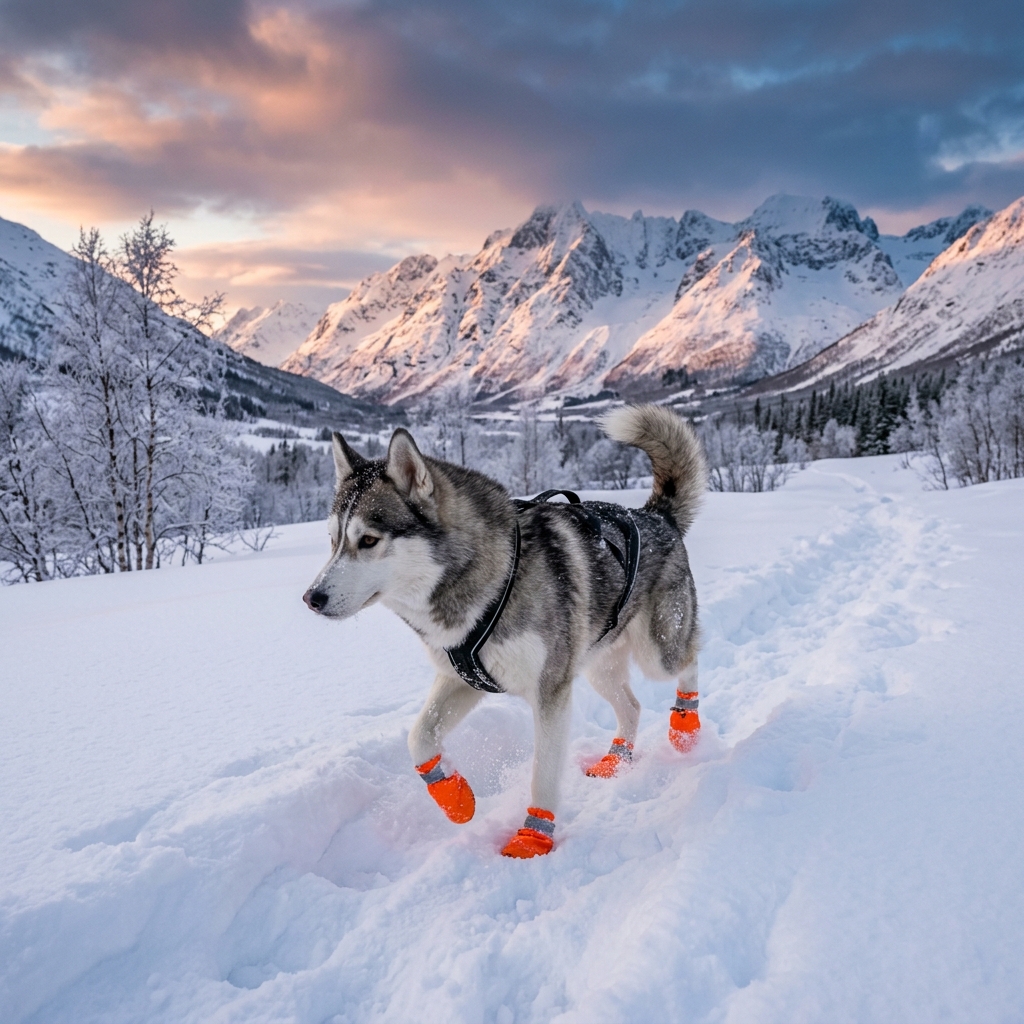
Winter Survival for Estonian Pets: From Ice to Indoor Warmth
Winter in Estonia is a serious affair, with temperatures often dropping below -20°C. For our pets, this means more than just a thicker coat; it requires a complete shift in their daily routine to stay safe, warm, and healthy during the long, dark months.
Paw Care and Road Salt
Estonian cities use a lot of salt and chemicals to keep roads clear. This salt is extremely corrosive to a dog's paws. After every walk, wash your pet's paws with lukewarm water. If you notice cracks or redness, apply a protective wax. In deep snow, look out for "ice balls" forming between the toes, which can be very painful for the dog to walk on.
Golden Advice
"Invest in a high-quality, insulated winter coat for your dog, especially if they are a short-haired breed or a senior. In Estonia's biting winds, a coat isn't a luxury; it prevents hypothermia and keeps their muscles warm. For very small dogs, consider dog boots to protect them from the freezing ground."
Dietary Adjustments
If your dog is very active outdoors in the Estonian winter, they may need slightly more calories to help maintain their body temperature. However, if they spend most of the winter curled up by the radiator, be careful not to overfeed. For outdoor cats, ensure their water bowl hasn't frozen over â use a heated bowl or change the water multiple times a day.
Antifreeze Warning
Antifreeze (ethylene glycol) is commonly used in Estonian cars during winter. It has a sweet taste that is unfortunately attractive to pets, but even a small lick can be fatal. Watch out for spills in garages and driveways. If you suspect your pet has ingested antifreeze, this is a top-tier emergencyâget to an Estonian vet immediately.